Introduction
In today’s highly competitive retail market, pricing can make or break a business. Customers compare prices instantly across websites, marketplaces, and physical stores before making a purchase decision. This is why retail price optimization has become one of the most important strategies for modern retailers.
Retailers are no longer relying only on guesswork or static pricing models. Instead, they use the latest market data, customer behavior insights, competitor analysis, and AI powered tools to determine the best possible price for every product.
Whether you run an eCommerce store, a retail chain, or a marketplace business, understanding price optimization in retail can help you improve profit margins, increase sales, and stay competitive.
In this complete guide, you’ll learn:
- What retail price optimization means
- How it works
- Benefits for retailers
- Popular pricing strategies
- The role of AI and automation
- How retail price optimization software improves profitability
Why Pricing Matters in Retail
Pricing is one of the biggest factors influencing customer buying decisions.
If your prices are too high, customers may switch to competitors. If prices are too low, your profits shrink. Finding the perfect balance is essential for long term growth.
Retail pricing directly affects:
- Revenue
- Profit margins
- Inventory movement
- Customer loyalty
- Market positioning
- Brand perception
According to retail industry studies, even a 1% improvement in pricing strategy can significantly increase operating profits.
This is why businesses are investing heavily in price optimization for retail strategies.
What is Retail Price Optimization?
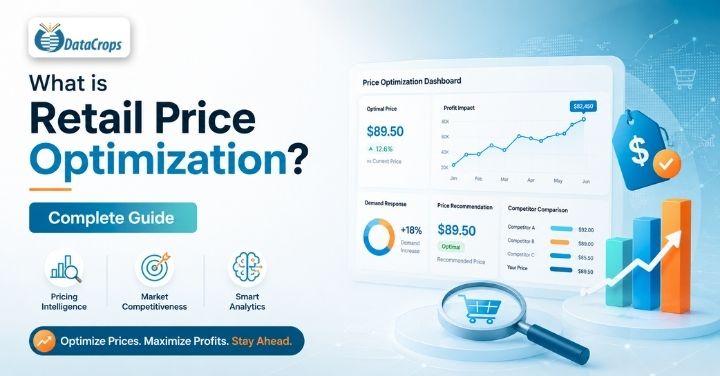
Retail price optimization is the process of using data, analytics, customer demand, competitor pricing, and AI driven insights to determine the ideal selling price for products.
The goal is simple:
- Maximize profitability
- Increase sales
- Stay competitive
- Improve customer satisfaction
Instead of manually setting prices, retailers continuously analyze multiple factors and adjust prices based on real time market conditions.
Simple Example
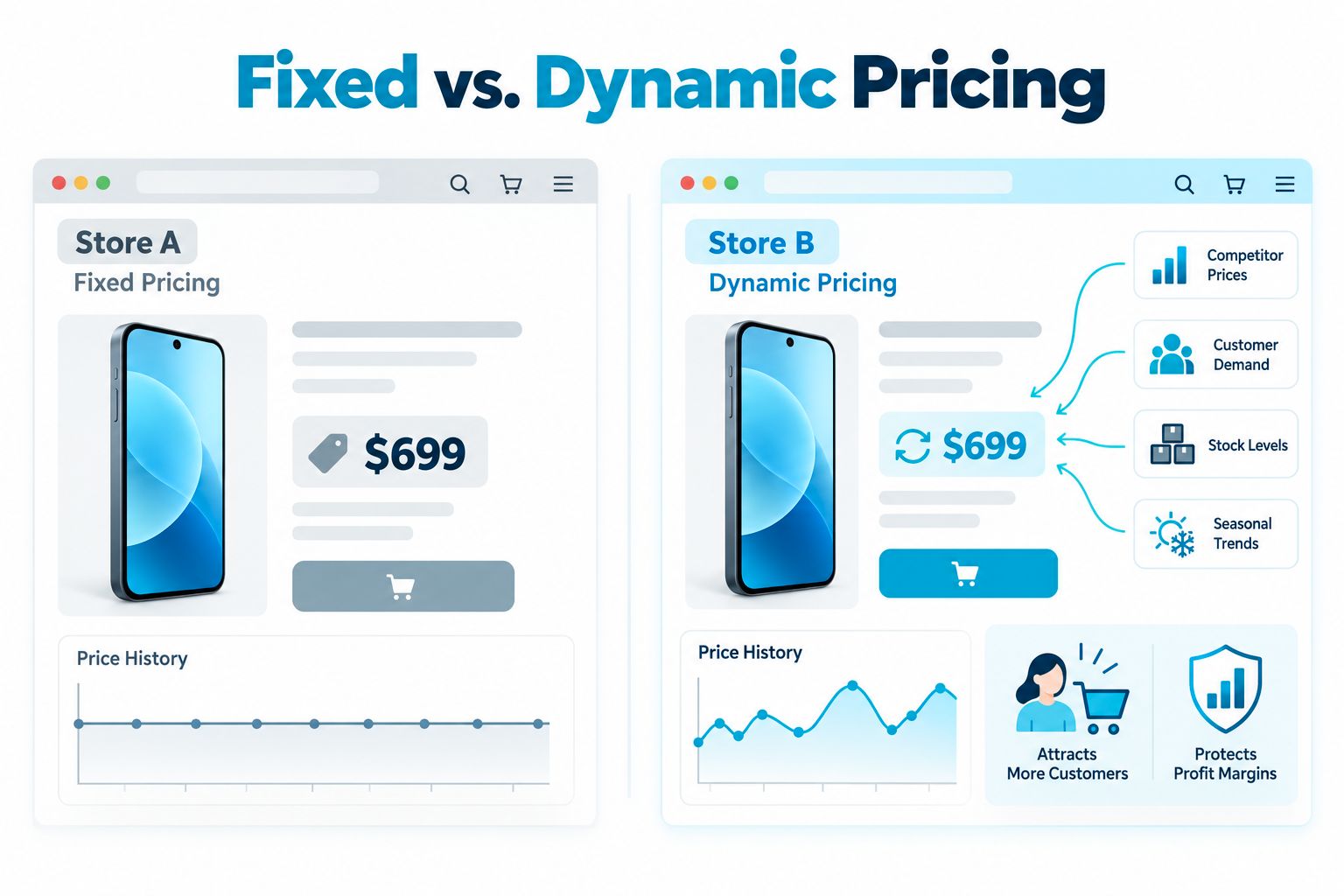
Imagine two online electronics stores selling the same smartphone.
- Store A keeps the same fixed price for months.
- Store B tracks competitor prices, customer demand, stock levels, and seasonal trends.
- Store B can dynamically adjust pricing to attract customers while maintaining healthy profit margins.
That’s the power of retail price optimization strategies.
How Retail Price Optimization Works
Modern retail pricing systems analyze huge amounts of data before recommending prices.
Key Components of Retail Price Optimization
1. Competitor Price Monitoring
Retailers monitor competitor prices across:
- eCommerce websites
- Marketplaces
- Retail stores
- Shopping comparison platforms
This helps retailers stay competitive without sacrificing margins.
2. Demand Forecasting
Demand forecasting predicts customer buying behavior.
For example:
- High demand products may support premium pricing
- Slow moving products may require discounts
3. Inventory Management
Inventory levels play a major role in pricing decisions.
Examples include:
- Overstock inventory markdown pricing
- Low stock availability price increase
4. Customer Behavior Analysis
Retailers analyze:
- Purchase patterns
- Browsing history
- Cart abandonment
- Price sensitivity
This helps businesses create smarter pricing strategies.
5. Dynamic Pricing Automation
Modern retail price optimization software can automatically adjust prices in real time based on market changes.
Key Factors That Affect Retail Pricing
Several factors influence price optimization for retailers.
1. Market Competition
Retailers must constantly monitor competitor pricing to remain attractive.
2. Product Demand
Higher demand often supports higher pricing.
3. Seasonal Trends
Products may sell differently during holidays, festivals, or sales events.
4. Inventory Levels
Stock availability directly impacts pricing decisions.
5. Economic Conditions
Inflation, supply chain costs, and market trends influence retail prices.
6. Customer Expectations
Today’s consumers expect transparent and competitive pricing.
Benefits of Retail Price Optimization
Implementing retail price optimization offers major business advantages.
1. Increased Profit Margins
Optimized pricing improves profitability without necessarily increasing sales volume.
2. Better Competitive Advantage
Retailers can respond quickly to competitor price changes.
3. Improved Inventory Turnover
Dynamic pricing helps clear slow moving inventory faster.
4. Enhanced Customer Satisfaction
Competitive pricing improves trust and customer loyalty.
5. Faster Pricing Decisions
Automation reduces manual work and improves efficiency.
6. Data Driven Decision Making
Retailers can make smarter decisions using analytics instead of assumptions.
Common Retail Pricing Strategies for Business Growth
Retailers use different pricing models depending on business goals.
1. Competitive Pricing
Prices are based on competitor pricing trends.
2. Dynamic Pricing
Prices change automatically depending on demand, competition, and inventory.
Popular:
- eCommerce
- Airlines
- Hotels
- Electronics retail
3. Promotional Pricing
Temporary discounts help boost short term sales.
4. Psychological Pricing
Examples include:
- $599 instead of $1000
- Limited time offers
5. Value Based Pricing
Products are priced according to perceived customer value.
6. Markdown Optimization
Retailers strategically reduce prices to clear inventory while protecting margins.
Challenges in Price Optimization for Retailers
Although pricing optimization provides huge benefits, retailers also face challenges.
1. Data Accuracy Problems
Incorrect or outdated data can lead to poor pricing decisions.
2. Price Wars
Aggressive competitor pricing can reduce profitability.
3. Customer Trust Issues
Frequent price changes may frustrate customers.
4. System Integration Complexity
Integrating pricing tools with ERP and inventory systems can be difficult.
5. Balancing Margin and Competitiveness
Retailers must avoid unnecessary discounting.
Best Practices for Retail Price Optimization
1. Use Real Time Data
Always rely on updated market insights.
2. Segment Your Products
Different product categories require different pricing strategies.
3. Monitor Competitors Continuously
Retail markets change quickly.
4. Automate Pricing Processes
Automation improves efficiency and reduces human error.
5. Focus on Profitability
Don’t compete only on low prices.
6. Test and Improve Regularly
Retail pricing should evolve continuously.
Example of Retail Price Optimization
An online electronics retailer struggled with shrinking margins and slow moving inventory.
After implementing retail price optimization software, the company:
- Monitored competitor prices automatically
- Used AI demand forecasting
- Optimized promotional pricing
Results:
- 15% increase in profit margins
- 20% faster inventory turnover
- Improved conversion rates
This shows how strategic pricing directly impacts business performance.
Future of Retail Price Optimization
Retail pricing is becoming more intelligent and automated.
1. AI Powered Personalization
Retailers will personalize pricing based on customer behavior.
2. Real Time Dynamic Pricing
More businesses will adopt instant pricing adjustments.
3. Predictive Analytics
Demand forecasting will become more accurate.
4. Omnichannel Pricing
Retailers will maintain consistent pricing across all channels.
5. Advanced Competitive Intelligence
Retailers will rely heavily on competitor monitoring tools.
Conclusion
Retail pricing is no longer based on assumptions or static spreadsheets. In today’s fast moving retail environment, businesses must use data driven strategies to remain competitive and profitable.
By implementing effective retail price optimization strategies, retailers can:
- Improve profit margins
- Increase sales performance
- Optimize inventory management
- Respond faster to market changes
- Deliver better customer experiences
Whether you are a growing eCommerce business or an established retail chain, investing in the right retail price optimization software can transform your pricing strategy and drive long term growth.
If your business wants to improve pricing accuracy, automate competitor monitoring, and maximize retail profitability, now is the perfect time to adopt smarter retail pricing solutions.
FAQs of Retail Price Optimization
1. What is retail price optimization?
Retail price optimization is the process of using data and analytics to determine the most profitable and competitive product pricing strategy.
2. Why is price optimization important in retail?
It helps retailers increase profits, improve sales, manage inventory efficiently, and stay competitive.
3. What is retail price optimization software?
It is a tool that uses AI, analytics, and automation to improve retail pricing decisions.
4. How does dynamic pricing work?
Dynamic pricing automatically adjusts product prices based on demand, competitor pricing, and market conditions.
5. Can small retailers use price optimization tools?
Yes. Many pricing solutions are scalable and suitable for small and medium sized businesses.
6. What industries benefit from price optimization?
Industries including eCommerce, grocery, fashion, travel, electronics, and consumer goods benefit from pricing optimization.