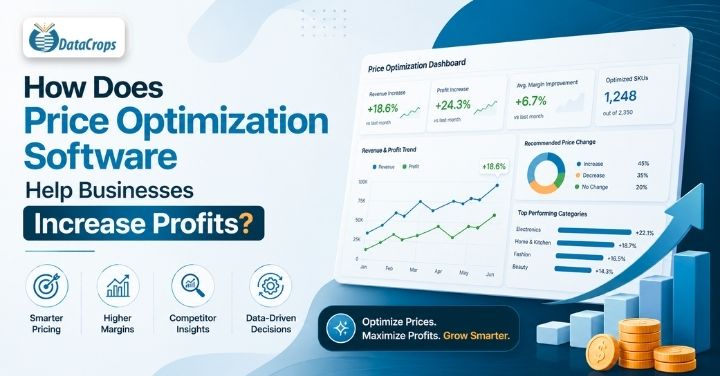
In today’s competitive market, using price optimization software is no longer optional; it’s essential. It enables businesses to make smarter pricing decisions, adapt to market changes, and ultimately increase profit margins without sacrificing customer satisfaction.
Let’s break down exactly how this technology works and why it’s a game changer for both retail and B2B companies.
What is Price Optimization Software?
Price optimization software is a tool that uses data, algorithms, and analytics to determine the best possible price for products or services.
Instead of manually setting prices, businesses can leverage price optimization and management software to analyze:
- Customer demand
- Competitor pricing
- Market trends
- Inventory levels
The goal?
To find the sweet spot where revenue and profit are maximized.
Why Pricing Is Important for Profit Margins
Even a small change in pricing can have a massive impact on profits.
Key Insight:
A 1% improvement in pricing can increase profits by 5 to 10% (McKinsey research).
Common Pricing Challenges:
- Guess based pricing strategies
- Lack of real time data
- Inconsistent pricing across channels
- Failure to track competitor prices
Without the right tools, businesses risk underpricing (losing profit) or overpricing (losing customers).
How Price Optimization Software Increases Profit Margins
1. Data Driven Pricing Decisions
Modern price optimizer software uses AI and analytics to remove guesswork.
It processes large volumes of data to recommend optimal pricing strategies based on:
- Historical sales
- Customer behavior
- Market demand
👉Result: More accurate pricing = higher margins
2. Real Time Market Adjustments
Markets change constantly. Prices that worked yesterday may not work today.
With retail price optimization software, businesses can:
- Automatically adjust prices in real time
- Respond to demand fluctuations
- Adapt to seasonal trends
Result: You never miss revenue opportunities
3. Competitor Price Monitoring
Keeping an eye on competitors manually is nearly impossible.
Price optimization tools track competitor pricing across multiple platforms and provide actionable insights.
Example:
If a competitor drops prices, your system can respond instantly without hurting your margins unnecessarily.
4. Demand Based Pricing Strategies
One of the biggest advantages of price optimization is dynamic pricing.
Prices can change based on:
- Demand spikes
- Customer segments
- Location
- Time of purchase
Result: Sell at higher prices when demand is high and stay competitive when demand drops
5. Reducing Human Error
Manual pricing often leads to:
- Calculation mistakes
- Delayed updates
- Inconsistent strategies
Automation ensures accuracy and consistency across all channels.
Result: Better control over pricing and improved profitability
Key Features of Price Optimization and Management Software
When choosing a tool, look for these essential features:
1. AI & Machine Learning
Automatically learns from data to improve pricing strategies over time
2. Dynamic Pricing Engine
Adjusts prices in real time based on market conditions
3. Advanced Analytics Dashboard
Provides insights into performance, margins, and trends
4. Automation
Eliminates manual pricing processes
5. Competitor Monitoring
Tracks competitor pricing continuously
Benefits for Price Optimization Software
Retail Businesses
Retailers operate in highly competitive environments where pricing can make or break success.
Using retail price optimization software, businesses can:
- Increase conversion rates
- Improve inventory turnover
- Reduce markdown losses
- Optimize promotional pricing
Example:
An eCommerce store using pricing automation can adjust prices hourly based on competitor data and demand, leading to higher sales and improved margins.
B2B Companies
Pricing in B2B is more complex due to:
- Negotiations
- Bulk discounts
- Custom contracts
That’s where b2b price optimization and management software becomes crucial.
Key Benefits:
- Personalized pricing strategies
- Margin control across deals
- Better quote management
- Data backed negotiation insights
Result: More profitable deals without losing customers
Real World Example of Price Optimization Software
| Business Metric | Before Price Optimization Software | After Price Optimization Software |
|---|---|---|
| Price Updates | Manual updates once a week | Automated latest price updates |
| Competitor Monitoring | Frequent missed competitor price changes | Continuous competitor price tracking |
| Inventory Management | Overstock and slow moving inventory issues | Better inventory turnover and stock optimization |
| Pricing Accuracy | Delayed response to market changes | Dynamic pricing based on market conditions |
| Sales Performance | Limited growth opportunities | 20% increase in sales |
| Profit Margins | Inconsistent profitability | 12% improvement in profit margins |
| Operational Efficiency | Time consuming manual processes | Automated workflows and reduced manual effort |
| Business Agility | Slow reaction to market trends | Faster response to customer demand and competition |
How to Choose the Right Price Optimizer Software
Not all tools are created equal. Here’s what to consider:
1. Business Type
- Retail vs B2B
- Industry specific requirements
2. Integration Capabilities
- CRM
- ERP
- eCommerce platforms
3. Scalability
Ensure the software grows with your business
4. Ease of Use
User friendly dashboards and reports
5. Customization
Ability to set rules, strategies, and pricing models
Implementation Checklist for Business Success
To maximize results:
- Start with clear pricing goals
- Use clean, accurate data
- Test pricing strategies before scaling
- Monitor performance regularly
- Combine automation with human oversight
Conclusion
Pricing is no longer just a business decision, it’s a strategic advantage.
By using price optimization software, businesses can move from guesswork to data driven decision making, ensuring every price point contributes to higher profit margins.
Whether you’re in retail or B2B, adopting the right price optimization and management software can unlock new revenue opportunities, improve efficiency, and give you a competitive edge.
FAQs of Price Optimization Software
1. What is price optimization software?
Price optimization software is a tool that uses data and algorithms to determine the best pricing strategy for maximizing revenue and profit.
2. How does price optimization software increase profit margins?
It uses real time data, competitor analysis, and demand forecasting to set optimal prices that maximize profitability.
3. Is price optimization software suitable for small businesses?
Yes, many tools are scalable and can help small businesses compete more effectively.
4. What is the difference between retail and B2B price optimization software?
Retail focuses on dynamic pricing and high volume transactions, while B2B tools handle complex pricing structures, negotiations, and contracts.
5. Can price optimization software be automated?
Yes, most modern tools offer full automation with AI driven pricing adjustments.