In today's hyper competitive digital marketplace, pricing is no longer just a business decision; it is a strategic advantage.
Companies that still rely on manual spreadsheets or static pricing rules often struggle to keep pace with rapidly changing customer demand, competitor pricing, market trends, and inventory fluctuations.
This is where AI price optimization comes in.
AI powered pricing systems analyze massive volumes of real time data and automatically recommend or adjust prices to maximize profitability, sales performance, and customer satisfaction.
Whether you're an ecommerce retailer, SaaS provider, marketplace seller, manufacturer, or enterprise brand, AI driven pricing is becoming a critical component of modern revenue strategy.
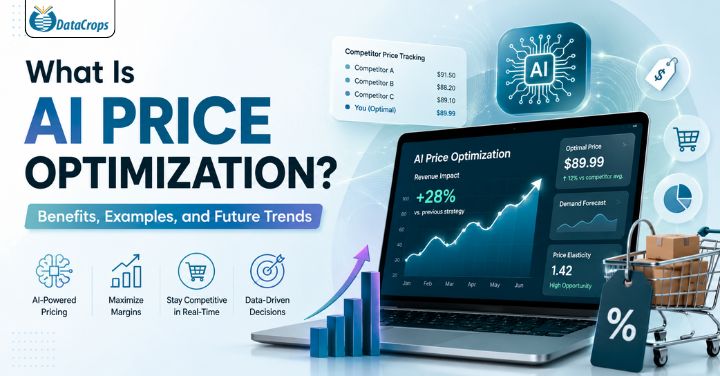
What Is AI Price Optimization?
AI price optimization is the use of artificial intelligence, machine learning, predictive analytics, and latest market data to determine the optimal price of a product or service.
The goal is to:
- Maximize profit margins
- Increase revenue
- Improve conversion rates
- Stay competitive
- Respond instantly to market changes
Instead of relying on historical assumptions, AI continuously learns from customer behavior, competitor prices, demand fluctuations, and market conditions.
Why Traditional Pricing Methods Are Failing
Many businesses still use:
- Fixed pricing models
- Manual competitor monitoring
- Spreadsheet calculations
- Quarterly pricing reviews
- Rule based discount strategies
These approaches struggle because markets now change every hour not every quarter.
Key Challenges Businesses Face
1. Competitor Prices Change Constantly
Online retailers can update prices hundreds of times per day.
Manual tracking cannot keep up.
2. Demand Fluctuations
Consumer behavior changes due to:
- Seasonality
- Holidays
- Promotions
- Social trends
- Economic conditions
3. Margin Pressure
Businesses often lower prices unnecessarily and sacrifice profits.
4. Inventory Imbalances
Overstock and stock shortages impact pricing decisions.
5. Massive Data Volumes
Modern businesses generate more data than humans can analyze effectively.
How AI Price Optimization Works
AI pricing engines combine multiple technologies:
- Machine Learning
- Predictive Analytics
- Big Data Processing
- Web Scraping
- Competitive Intelligence
- Demand Forecasting
- Dynamic Pricing Algorithms
Step 1: Data Collection
AI gathers information from:
- Competitor websites
- Ecommerce marketplaces
- Historical sales records
- Customer behavior
- Inventory systems
- Market trends
This is where web scraping and price intelligence platforms become extremely valuable.
Step 2: Pattern Recognition
Machine learning models identify:
- Buying patterns
- Demand elasticity
- Seasonal trends
- Conversion behavior
- Price sensitivity
Step 3: Price Recommendation
The system calculates the optimal selling price.
It considers:
- Competitor prices
- Inventory levels
- Profit targets
- Demand forecasts
Step 4: Continuous Learning
Unlike traditional systems, AI continuously improves its pricing decisions based on new outcomes.
Benefits of AI Price Optimization
1. Increased Profit Margins
- AI identifies opportunities to raise prices when demand is strong.
- Even small pricing improvements can generate substantial profit gains.
Industry studies suggest that a 1% pricing improvement can increase profits by significantly more than a 1% increase in sales volume because pricing directly impacts margins.
2. Real Time Competitive Pricing
- AI monitors competitors continuously.
- Businesses can react instantly instead of waiting for manual reviews.
Example
If a competitor reduces pricing by 10%, AI can:
- Match the price
- Partially adjust
- Maintain pricing if demand remains strong
3. Better Customer Satisfaction
- AI helps create fair and market relevant pricing.
- Customers are less likely to perceive products as overpriced.
4. Inventory Optimization
AI aligns pricing with stock levels.
Overstock Situation
- Lower prices strategically
- Increase sales velocity
Low Inventory Situation
- Increase prices
- Protect margins
5. Improved Revenue Growth
- Businesses often discover hidden pricing opportunities.
- AI uncovers patterns humans typically miss.
6. Faster Decision Making
What once took analysts days can now happen in seconds.
AI Powered Price Optimization Use Cases
Ecommerce Retail
Retailers use AI to:
- Monitor competitors
- Optimize promotions
- Adjust prices dynamically
Popular Categories
- Electronics
- Fashion
- Home goods
- Consumer products
SaaS Companies
Subscription businesses optimize:
- Plan pricing
- Feature packaging
- Customer segmentation
Travel Industry
- Airlines and hotels have used dynamic pricing for years.
- AI enhances these systems by forecasting demand more accurately.
Manufacturing
Manufacturers optimize:
- Distributor pricing
- Contract pricing
- Bulk order discounts
Marketplace Sellers
Amazon sellers increasingly rely on:
- Automated repricing
- Competitive intelligence
- AI driven margin optimization
Real World Examples of AI Price Optimization
Example 1: Online Electronics Retailer
- Challenge: Competitors changed prices multiple times daily.
- Solution: AI monitored market pricing and adjusted product prices automatically.
Result:
- Higher competitiveness
- Faster reactions
- Improved profit margins
Example 2: Fashion Ecommerce Brand
- Challenge: Excess seasonal inventory.
- Solution: AI predicted declining demand and optimized markdown timing.
Result:
- Reduced inventory holding costs
- Higher sell through rates
Example 3: SaaS Platform
- Challenge: Subscription conversion rates were declining.
- Solution: AI analyzed customer willingness to pay.
Result:
- Better package structure
- Improved conversion rates
- Increased recurring revenue
Retail AI Maximize Margin Digital Tagging Price Optimization
Modern retailers increasingly combine:
- Digital shelf monitoring
- Electronic shelf labels
- Dynamic pricing engines
- AI driven price optimization
This integrated approach allows retailers to:
- Maximize margins
- Improve pricing consistency
- Reduce pricing errors
- React faster to market shifts
Retail AI systems can automatically connect competitor intelligence, demand forecasting, and digital tagging technologies into a single pricing ecosystem.
Best Practices for Implementing AI Based Price Optimization
1. Start With High Quality Data
AI is only as effective as the data it receives.
Prioritize:
- Clean product data
- Accurate competitor pricing
- Reliable sales history
2. Monitor Competitors Continuously
- Latest market visibility is essential.
- Web scraping and price intelligence platforms can automate competitor monitoring.
3. Define Business Objectives
Decide whether your priority is:
- Margin growth
- Revenue growth
- Market share
- Inventory reduction
4. Combine Human Expertise With AI
- The most successful organizations use AI recommendations alongside pricing experts.
- Human oversight remains valuable.
Test and Measure
Track:
- Revenue
- Profit margin
- Conversion rates
- Average order value
- Customer retention
Future Trends in AI Price Optimization
The future of pricing is becoming increasingly autonomous.
1. Hyper Personalized Pricing
AI will tailor pricing based on:
- Customer behavior
- Purchase history
- Loyalty status
2. Generative AI Pricing Assistants
Businesses will use conversational AI systems to:
- Explain pricing decisions
- Forecast outcomes
- Recommend pricing strategies
3. Autonomous Pricing Systems
Future AI platforms will:
- Monitor markets
- Make decisions
- Execute pricing changes
With minimal human intervention.
4. Predictive Competitive Intelligence
- AI will predict competitor moves before they happen.
- This enables proactive pricing strategies.
Key Takeaways
- AI price optimization uses machine learning and analytics to determine optimal pricing.
- Businesses can improve margins, revenue, and competitiveness through AI driven pricing.
- Real time competitor monitoring is a major advantage.
- Ecommerce, retail, SaaS, travel, and manufacturing companies are leading adopters.
- Future pricing systems will become increasingly autonomous and predictive.
- Combining AI with price intelligence and web scraping creates a powerful competitive advantage.
FAQs of AI price optimization
1. Is AI price optimization worth it?
Yes. Businesses can improve revenue, margins, and competitiveness by using AI to make faster and more accurate pricing decisions.
2. How does AI powered price optimization work?
It collects market data, analyzes demand patterns, evaluates competitor pricing, and recommends optimal prices using machine learning algorithms.
3. Which industries benefit most from AI price optimization?
Industries with dynamic pricing environments benefit the most:
- Ecommerce
- Retail
- Travel
- SaaS
- Manufacturing
- Marketplaces
4. What data is needed for AI price optimization?
Common inputs include:
- Historical sales data
- Competitor pricing
- Inventory levels
- Customer behavior
- Market trends
- Demand forecasts
5. Can small businesses use AI price optimization?
Absolutely. Modern SaaS based pricing platforms make AI driven pricing accessible to businesses of all sizes.
6. What is the difference between dynamic pricing and AI price optimization?
- Dynamic pricing changes prices based on predefined rules.
- AI price optimization continuously learns from data and improves pricing decisions over time.